

The Intersection of Poker and Behavioral Economics for Smarter Decisions
Sebastian Francis April 10, 2026 0 COMMENTS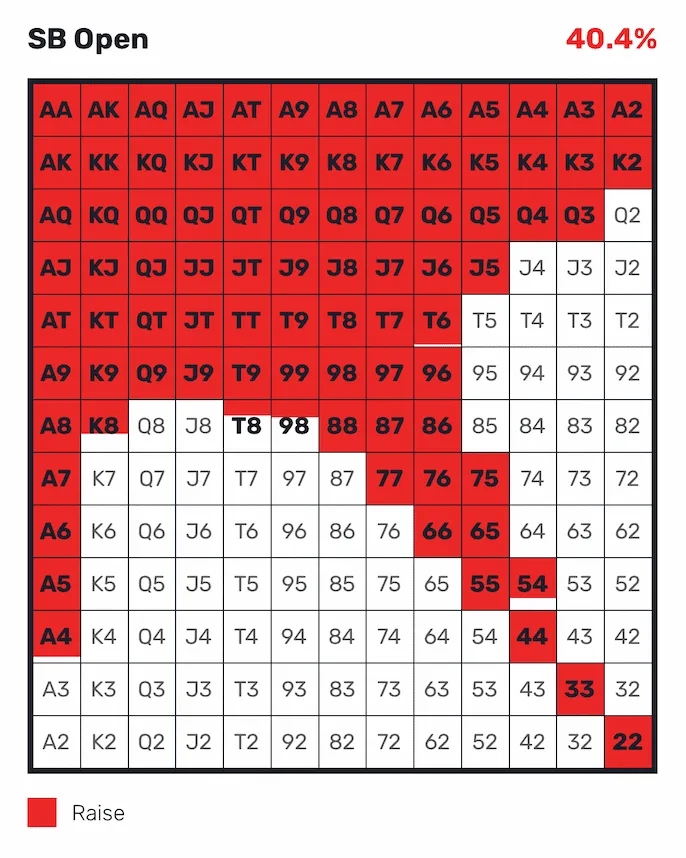
Let’s be honest. Most of us think we’re pretty rational. We weigh options, consider outcomes, and make the logical choice. Right? Well, behavioral economics—and the game of poker—tell a different story. They reveal a world where our decisions are messy, emotional, and often hilariously flawed.
Here’s the deal: poker isn’t just a card game. It’s a brutal, beautiful laboratory for human psychology. And behavioral economics? It’s the science of why we make irrational financial choices. Put them together, and you’ve got a powerful framework for understanding decision-making in business, investing, and, well, life.
Your Brain at the Poker Table: A Cocktail of Biases
Every hand in poker is a decision under uncertainty. You don’t have perfect information. Sound familiar? It should. That’s exactly like deciding on a job offer, an investment, or a new marketing strategy. And in those moments, our built-in cognitive shortcuts—biases—take the wheel.
The Sunk Cost Fallacy (Or, “I’ve Come This Far…”)
You know the feeling. You’ve put money into a pot. You’ve invested time in a project. Even when the evidence screams “quit,” you keep going because you’ve already “invested” so much. In poker, this is calling bets with a weak hand just because you’re already pot-committed. It’s throwing good money after bad.
Behavioral economists like Richard Thaler have shown we do this everywhere. We sit through a bad movie because we paid for the ticket. We stick with a failing business initiative because of the years we’ve sunk into it. Poker trains you to recognize this instantly. The money in the pot is gone. It’s not yours anymore. The only question is: what’s the best decision right now?
Resulting: Judging a Decision by Its Outcome
This is a huge one. You make a brilliant, statistically sound bluff. Your opponent makes a terrible, emotional call and beats you. The outcome is bad. Does that mean your decision was wrong? Nope. Not at all.
But our brains are wired to conflate outcome quality with decision quality. We call it “resulting.” In the real world, this leads to punishing smart risks that didn’t pan out and rewarding dumb luck that did. Poker players learn to separate the two. They focus on process over results. It’s about making the highest-EV (expected value) choice every time, knowing that variance—luck—will play its part in the short term.
Mental Models from the Felt to the Boardroom
So, how do we apply these poker-informed behavioral insights? Let’s break down a few key strategies for better decision-making frameworks.
1. Think in Ranges, Not Certainties
Amateurs try to put an opponent on one specific hand. Pros think in ranges—the spectrum of hands someone could have based on their actions. This is directly applicable to strategic planning.
Instead of asking “Will our competitor do X?”, ask “What is the range of responses they might have?” This shifts you from binary, yes/no thinking to probabilistic thinking. You prepare for multiple futures, not just the one you hope for or fear.
2. Manage Your Bankroll (And Your Emotional Capital)
In poker, bankroll management is sacred. You don’t bet your entire stack on one marginal hand. It’s a safeguard against variance and your own emotional swings—what they call “tilt.”
In business, this translates to risk management and emotional regulation. Are you betting the company on one launch? Are you making a decision out of frustration (going “on tilt”) after a loss? Having rules—like a maximum percentage to invest in any single venture—protects you from yourself. It’s a pre-commitment strategy against future irrationality.
3. The Power of Meta-Cognition: Thinking About Thinking
Poker forces you to ask: “What does my opponent think I have? What do they think I think they have?” It’s a recursive loop of perspective-taking. This meta-cognition is gold for negotiation and leadership.
Before a big meeting, don’t just prep your arguments. Model the other person’s mindset. What are their incentives? Their constraints? Their likely biases? This isn’t manipulation; it’s empathy with a strategic lens. It helps you craft messages that actually land.
A Quick Reference: Poker Biases & Business Translations
| Poker Bias | Behavioral Econ Term | Business/ Life Manifestation |
| Chasing losses | Loss Aversion | Doubling down on a failing project to avoid realizing a loss. |
| “I’m due for a win!” | Gambler’s Fallacy | Assuming a random event is “due” after a streak (e.g., “We’ve had three bad quarters, so a good one must be next”). |
| Overplaying a big hand | Overconfidence Bias | Assuming your brilliant product idea cannot fail, blinding you to market signals. |
| Playing scared money | Risk Aversion (Extreme) | Passing on high-upside opportunities because you’re terrified of any loss, stunting growth. |
Honestly, that table just scratches the surface. But you get the idea.
The Endgame: Embracing Uncertainty
Ultimately, the fusion of poker strategy and behavioral economics teaches us one profound lesson: to be comfortable with uncertainty. To make peace with the fact that good decisions can lead to bad outcomes, and vice-versa. The goal isn’t to be right every time—that’s impossible. The goal is to have a robust process that, over time, leads to positive expected value in your choices.
It’s about becoming a better, more calibrated decision-maker. One who spots their own sunk costs, who thinks in ranges, and who knows that sometimes, the best move is to fold a decent hand and wait for a better spot. In a world that’s increasingly complex and noisy, that’s not just a skill for the poker table. It’s a foundational skill for navigating… well, everything else.

RELATED ARTICLES


Ads
